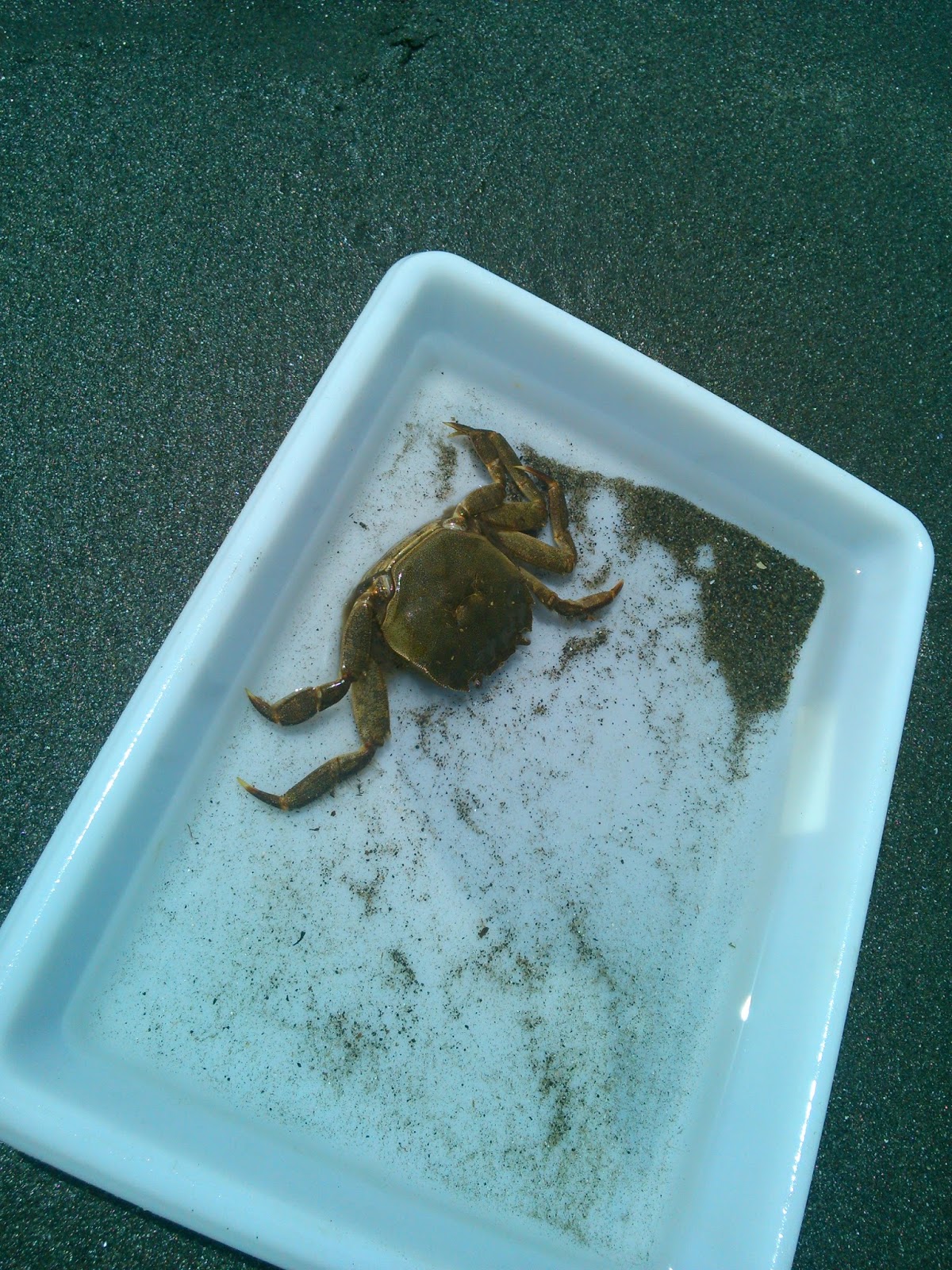
ヨコエビの中にはいくつか、あまり横にならないグループがあります。
Aoridae ユンボソコエビ科 もそういったヨコエビです。
というわけで、兼ねてより予告していた例のブツです。世界のユンボソコエビ科を日本語で語り散らすというのも珍しい試みではないでしょうか。
ユンボソコエビ科には今のところ25属250種あまりが知られていますが、この中で実際に見たことがある属は1割,種は1%に過ぎず(未同定標本はまあそれなりに)。文献調査は自学と備忘録的な側面が強いですが、分布や形態を属ごとに比べると味わい深い世界が広がっています。かのMyersが半世紀も追い続けている分類群なだけはあります。騙されたと思ってご堪能ください。
一応体制から。

ドロクダムシを筆頭にドロクダムシ下目のメンバーは、典型的な姿として、底節板は小さく、触角は太く発達して、底生のデトリタス食者または捕食者です。ユンボソコエビ科もそういった特徴を具えており、かつてはドロクダムシ科とされていました。
ユンボソコエビ科の特徴として目を引くのは、オスの第1咬脚が発達する点です。
ドロクダムシにせよヒゲナガヨコエビにせよカマキリヨコエビにせよ、ドロクダムシ下目においてオスがマッチョな咬脚をもつ場合、普通は第2咬脚が発達します。メリタヨコエビやらハマトビムシやらタテソコエビやら他のヨコエビにおいても同様です。なので、ヨコエビギナーにとっては、フィールドにおいて科の識別を行う際にはありがたい存在です。
Outline of World Aoridae
以下、各属の概要を示しています。
全体図は剛毛を省略しています。また、灰色となっているのは記載図にない部位です。分布図については全種のタイプ産地と、後の研究で追加された代表的な産地を盛り込みました。本文中にて適宜、形態形質に言及していますが、同定のキーとして活用することは想定していませんのでご注意ください。
ユンボソコエビ科は、形態学的手法による系統分類によって3つのクレード(Aora clade,Bemlos clade,Lembos clade)を含むことが示されています (Myers, 1988a)。これらのクレードに含まれる属の分布は1つの図にまとめ、Myersが提唱した系統樹を模式化した図もつけました。
(rules of figures)
* Plotted type locality of all species and major site of additional study in some groups.
* 3 systematic trees drawn based on Myers (1988a).
(rules of plates)
* Undescribed parts in former studies colored gray.
* Setae omitted.
𝐴𝑜𝑟𝑎 Krøyer, 1845 ヒメユンボソコエビ属

【種数】20種
【オス第1咬脚】melochelate
【第3尾肢】双葉
担名属。Myers (1988a) が示した”Aora clade”に含まれます。多くが海藻の表面から得られていますが、A. karibu という種はタラバガニ科の体表から採取されています。日本からは A. pseudotypica ニホンヒメユンボソコエビ が記録されています。
 |
| data from: WoRMS. |
𝐴𝑜𝑟𝑒𝑙𝑙𝑎 Myers, 1981

【分布】南太平洋
【種数】1種
【オス第1咬脚】carpochelate
【第3尾肢】双葉
Myers (1988a) が示した”Aora clade”に含まれます。フィジーから得られている単型分類群。オスの第2咬脚もcarpochelateとなります。
𝐴𝑜𝑟𝑜𝑖𝑑𝑒𝑠 Walker, 1898 ユンボソコエビ属

【分布】北太平洋
【種数】18種
【オス第1咬脚】melochelate
【第3尾肢】双葉
Myers (1988a) が示した”Aora clade”に含まれます。Aora ヒメユンボソコエビ属 と似ていますが、第1触角の副鞭がありません。

本邦既知種はかなりブラブラしており、A. columnaris ボウアシブラブラソコエビ,A. curvipes ブラブラソコエビ,A. ellipticus マルアシブラブラソコエビ,A. longimerus ケナガブラブラソコエビ,A. myojinensis ミョウジンブラブラソコエビ,A. punctatus ゴマフブラブラソコエビ,A. rubellus アカオビブラブラソコエビ,A. secunda ケブカブラブラソコエビ,A. semicurvatus ブラブラソコエビモドキ の8種に和名があります。このうちミョウジンブラブラソコエビはRDBに掲載されるなど、沿岸環境の保全において特筆すべきものも含まれています。
𝐴𝑟𝑐ℎ𝑎𝑒𝑜𝑏𝑒𝑚𝑙𝑜𝑠 Myers, 1988

【分布】南太平洋
【種数】1種
【オス第1咬脚】亜はさみ形
【第3尾肢】双葉
オーストラリアのバス海峡から得られています。オスの第2咬脚も亜はさみ形。大顎髭第3節は第2節より短くなります。
 |
| data from: Myers (1999). |
𝐴𝑟𝑐𝑡𝑜𝑙𝑒𝑚𝑏𝑜𝑠 Myers, 1979
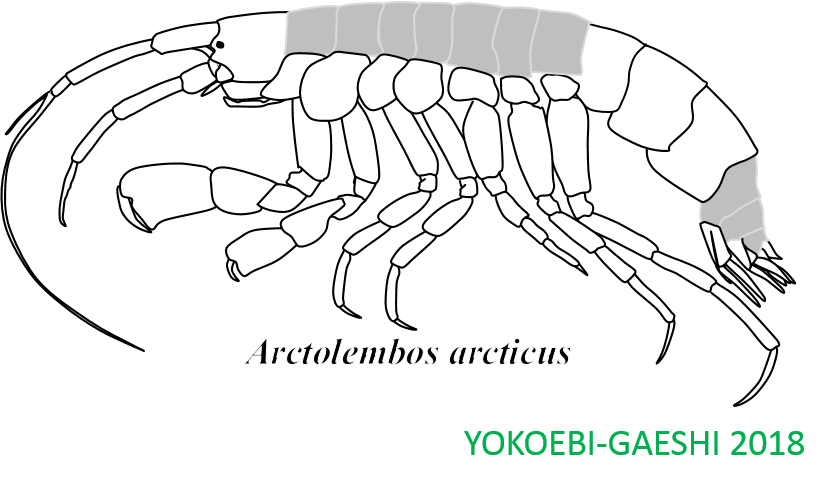
【分布】北極海
【種数】1種
【オス第1咬脚】亜はさみ形
【第3尾肢】双葉
ロシア極北から得られている単型分類群。オスの第2咬脚も亜はさみ形。第1触角が明らかに第2触角より長く、特に鞭部が伸長します。
 |
| data from: Hansen (1887). |
𝐴𝑢𝑠𝑡𝑟𝑎𝑙𝑜𝑚𝑖𝑐𝑟𝑜𝑑𝑒𝑢𝑡𝑜𝑝𝑢𝑠 Myers, 1988

【分布】南太平洋
【種数】3種
【オス第1咬脚】carpochelate
【第3尾肢】双葉
オーストラリア,ニュージーランドから得られています。オスの第2咬脚は単純型。
 |
| data from: J.L.Barnard (1972), Haswell (1879). |
𝐴𝑢𝑡𝑜𝑛𝑜𝑒 Bruzelius, 1859

【種数】15種
【オス第1咬脚】亜はさみ形
【第3尾肢】双葉
Myers (1988a) が示した”Lembos clade”に含まれます。主に大西洋の東岸に沿って広く分布しますが、一種のみポリネシアから記録があります。オスの第2咬脚も亜はさみ形。大顎髭第3節は第2節より長い。複眼の発達度合いには幅があり、種により個眼が分散的になります。
𝐵𝑒𝑚𝑙𝑜𝑠 Shoemaker, 1925

【分布】南太平洋,南太平洋
【種数】72種
【オス第1咬脚】亜はさみ形
【第3尾肢】双葉
Myers (1988a) が示した”Bemlos clade”に含まれます。ユンボソコエビ科において最大のグループです。オスの第1,2咬脚はともに亜はさみ形。
赤道を中心に、北に約35°,南に約35°の範囲に分布するという、分かりやすいトロピカルなヨコエビです。B. edentulusは無眼種。大顎髭第3節は第2節より長い。
 |
| data from: Alonso de Pina (1992), Ariyama (2004), J.L. Barnard (1967, 1970, 1979), K.H. Barnard (1955), Chapman (2007), Cchevreux (1911), Krapp-Schickel & Myers (2006), Ledoyer (1967), Mateus & Mateus (1966), Moore (1988), Myers (1975a,b, 1977a,c, 1978, 1979, 1981b, 1985, 1988b, 1998b, 2002, 2004, 2005, 2009), Ortiz & Lalana (1997, 2002), Ortiz, Lalana & López (1992), Ortiz & Lemaitre (1997), Ortiz & Nazábal (1984), Reid (1951), Ren (2006), Schellenberg (1938), Shoemaker (1925), Sivaprakasam (1970), Stebbing (1888), Walker (1909). |
𝐶𝑎𝑚𝑎𝑐ℎ𝑜 Stebbing, 1888

【分布】北海,インド洋,南太平洋
【種数】3種
【オス第1咬脚】亜はさみ形
【第3尾肢】双葉(内肢は退化的)
響きがかわいい深海性種です。
ニュージーランドと北海という地球の反対側から得られており、泥底に生息しているようです。
ちなみに、完品オスの報告が見当たりません。過去の記載にも不明確な部分が多く、更なる研究が待たれます。
 |
| data from: J.L.Barnard (1961), Coleman & Lörtz (2010), Myers (1998a), Stebbing (1888, 1908). |
𝐶ℎ𝑒𝑣𝑟𝑒𝑢𝑥𝑖𝑢𝑠 Bonnier, 1896

【分布】北大西洋
【種数】1種
【オス第1咬脚】carpochelate
【第3尾肢】単葉
イベリア半島ビスケー湾からのみ知られる単型分類群。複眼は退化。オスの第2咬脚は発達の弱い亜はさみ状。
 |
| data from: Bonnier (1896). |
𝐶𝑜𝑙𝑢𝑚𝑏𝑎𝑜𝑟𝑎 Conlan & Bousfield, 1982

【分布】東太平洋
【種数】2種
【オス第1咬脚】melochelate
【第3尾肢】双葉
Myers (1988a) が示した”Aora clade”に含まれます。
ツッコミ待ちとしか思えない底節板をしています。記載文では「Coxa 1 circular, enlarging with age to enclose the head」と極めてシンプルに記述されています。年を経るごとに見たくないものが増えるということでしょうか。ちなみにメスは割と普通です。生息地では昆布の表面なんかに付いているようです。
北米西岸から得られている担名種 C. cyclocoxa のほか、C. longipalpus という種もこの属として扱われています。しかしながら、成熟オスの形態が示されておらず、歩脚が全て欠損した不完全な標本に基づく記載であるとともに、その後の研究で本属に移動された経緯も明言されておらず (Barnard & Karaman, 1991)、記載当初のIsaeaとして扱う文献もあったりして (Gabre et al., 2010)、謎の多い分類群です。
𝐺𝑙𝑜𝑏𝑜𝑠𝑜𝑙𝑒𝑚𝑏𝑜𝑠 Myers, 1985
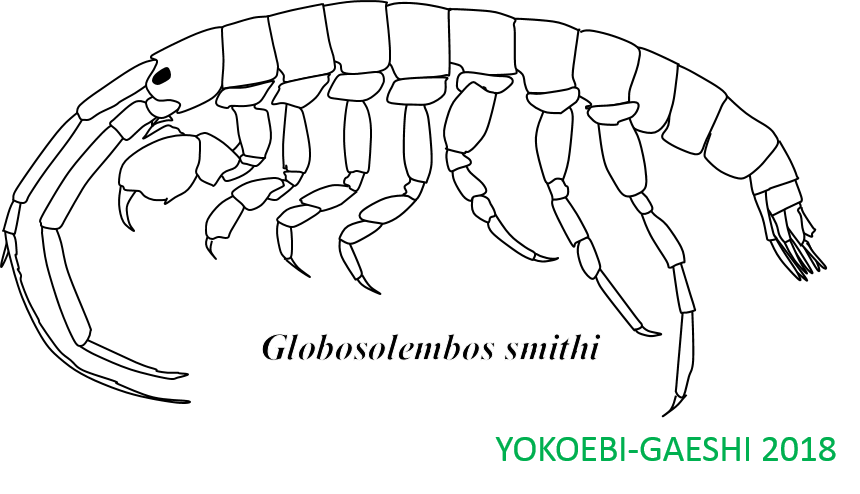
【分布】東大西洋,西インド洋,南太平洋
【種数】16種
【オス第1咬脚】亜はさみ形(掌縁が平滑傾向)
【第3尾肢】双葉
Myers (1988a) が示した”Bemlos clade”に含まれます。Lembos や Bemlos に似ますが、オスの第1咬脚腕節より前節が長いことにより識別されます。また、メスにおいても第1咬脚がそれなりに大きいという特徴があります。
Bemlosと同様、赤道に沿って帯状に分布していますが、Bemlos よりやや広く±40°の範囲に及びます。
𝐺𝑟𝑎𝑛𝑑𝑖𝑑𝑖𝑒𝑟𝑒𝑙𝑙𝑎 Coutière, 1904 ドロソコエビ属

【分布】太平洋,南大西洋
【種数】44種
【オス第1咬脚】carpochelate
【第3尾肢】単葉
赤道の南北45°の範囲に帯状分布しています。
川をさかのぼるように分布したり、内海で採取されたりと、淡水に近い汽水域からよく報告される一方、かなり塩分耐性をもつ種も含まれているようで、オーストラリアでは天日塩の製造場所から採取されたこともあります (Moore, 1984)。
 |
| data from: Ariyama (1996, 2013), Ariyama & Taru (2017), Bano & Kazmi (2010), J.L. Barnard (1970, 1977), K.H.Barnard (1935, 1951), Bochert & Zettler (2010), Chapman & Dorman (1975), Dang (1968), Grifiths (1974b), Hou & Li (2002), Jurde et al. (2013), Ledoyer (1979b, 1982), Moore (1986), Morino & Dai (1990), Myers (1981a, 1998b, 2004, 2009), Ren (2006), Schellenberg (1925, 1936, 1938), Shoemaker (1935), Stephensen (1948), Wongkamhaeng, Coleman & Pholpunthin (2013), Wongkamhaeng, Pholpunthin & Azman (2012). |
昨年、三陸地方から記載された G. sanrikuensis サンリクドロソコエビ は記憶に新しいと思いますが、復興が進む中、生息地となる干潟環境が急速に失われつつある現状も強く示唆されており、目が離せません。また、G. vietnamica という、ベトナムへの米国の軍事介入が始まったころに採取された標本を元に当時ハノイ大にいたソ連の無脊椎動物研究者が記載している種なんかもあります。ドラマティックなやつです。
 |
| G. japonica ニホンドロソコエビ(上がオス,下がメス) |
本邦におけるユンボソコエビ科の最普通種と考えられる G. japonica ニホンドロソコエビ は、生き馬の眼を抜く苛烈な分類見直しに揉まれるヨコエビ界隈において、記載されてからじつに80年も属位変更がないという、ビギナーにはありがたい普通種です。無印ガタガール1巻の表紙返しにも掲載されています (小原, 2016)。オスの第1咬脚が太く、他種よりマッチョな印象があります。日本では北海道から九州まで見られるので、温帯や亜寒帯に分布するのが普通に思えます。しかし、世界的に見ると、どうやら本属の自然分布としては北海道の G. japonica が北限のようです。我が国において、G. japonica と G. sanrikuensis の他には、G. rubroantennata アカヒゲドロソコエビ,G. fasciata シマドロソコエビ,G. osakaensis オオサカドロソコエビが知られています。
G. japonica は外来種問題の議論も盛んです (Chapman & Dorman, 1975 など)。これについてはまたの機会に掘り下げたいと思います。
𝐿𝑒𝑚𝑏𝑜𝑖𝑑𝑒𝑠 Stebbing, 1895

【種数】4種
【オス第1咬脚】亜はさみ形
【第3尾肢】双葉
Myers (1988a) が示した”Lembos clade”に含まれます。中東からアフリカにかけてのインド洋西岸に分布しています。第2咬脚の長節がだいぶおかしな形状をしています。
𝐿𝑒𝑚𝑏𝑜𝑠 Spence Bate, 1857 コンピラソコエビ属

【分布】大西洋,インド洋
【種数】7種
【オス第1咬脚】亜はさみ形
【第3尾肢】双葉
オスの第2咬脚は亜はさみ形。大顎髭第3節は第2節より長い。
 |
| data from: Alonso de Pina (1992), K.H. Barnard (1916, 1955), Ledoyer (1979a), Lyons & Myers (1990), Myers (1977a), Spence Bate (1857), Stebbing (1895), Walker (1904). |
日本からは Lembos clavatus Hirayama, 1984 ノゾキコンピラソコエビ という種が報告されていますが、かなり分布の隔たりがあることと、明らかに本属とは異なる形態的特徴が散見されることに加え、パーツの欠損があるメス1個体の標本しか使用されていないため、分類学的な位置づけが未確定となっています (Barnard & Karaman, 1991)。その後の国内の研究では、タイプ産地である九州地方では有明海 (松尾ほか, 2007) で採集されており、三重県の五ヶ所湾 (Yokoyama & Ishihi, 2007) からも報告があるため、再検討が待たれます。
𝑀𝑒𝑟𝑖𝑑𝑖𝑜𝑙𝑒𝑚𝑏𝑜𝑠 Myers, 1988

【分布】南太平洋
【種数】3種
【オス第1咬脚】亜はさみ形
【第3尾肢】双葉
Myers (1988a) が示した”Bemlos clade”に含まれます。ニュージーランド南部の亜南極島嶼に分布しています。オスの第1咬脚が発達し、掌縁に顕著なトゲを生じます。第2咬脚はrectipalmate。大顎髭第3節は第2節より短くなります。
𝑀𝑖𝑐𝑟𝑜𝑑𝑒𝑢𝑡𝑜𝑝𝑢𝑠 Costa, 1853

【分布】地中海,東大西洋,南太平洋
【種数】13種
【オス第1咬脚】carpochelate(種により内側に親指状突起を生じる)
【第3尾肢】双葉
Myers (1988a) が示した”Lembos clade”に含まれます。欧州を中心にスカンディナビアから南アフリカにかけて、大西洋東岸に沿った分布を示し、1種のみ豪州から記録があります。オスの第2咬脚は発達の弱いrectipalmate。第1触角には短い副鞭あり。今年2月、M. periergos Myers, Plaiti & Rousou, 2018 がキプロスから記載されました。
𝑃𝑎𝑟𝑎𝑔𝑟𝑎𝑛𝑑𝑖𝑑𝑖𝑒𝑟𝑒𝑙𝑙𝑎 Ariyama, 2002 ヒメドロソコエビ属

【分布】太平洋北東部
【種数】3種
【オス第1咬脚】carpochelate
【第3尾肢】
日本から中国海南省にかけて分布しています。ドロソコエビ属に似ていますが、かなり華奢です。P. minima ヒメドロソコエビは、オス第2触角柄部第5節下端にちょっとしたコブがあり、そこはかとなく他とは違うアピールが感じられます。

本属は設立から4年後にRen (2006) によって Granidierella ドロソコエビ属のシノニムとされる事件がありましたが、その理由が「あまり違いがない」という薄弱なものであったため、その7年後に P. urauchiensis ウラウチヒメドロソコエビ という1新種の記載と、Ren (2006) が Grandidierella として記載した P. unidentata ワカウラヒメドロソコエビ の属位変更を行うという形で「倍返し」されたというのは、ヨコエビ関係者の間では有名な話です。
𝑃𝑎𝑟𝑎𝑚𝑖𝑐𝑟𝑜𝑑𝑒𝑢𝑡𝑜𝑝𝑢𝑠 Myers, 1988

【分布】太平洋東岸
【種数】4種
【オス第1咬脚】carpochelate
【第3尾肢】 双葉
Myers (1988a) が示した”Lembos clade”に含まれます。中米を中心として、カリフォルニアからノースカロライナにかけての北米大陸南岸と、ガラパゴスにかけて南米大陸北西岸に分布しています。
𝑃𝑎𝑟𝑎𝑜𝑟𝑜𝑖𝑑𝑒𝑠 Stebbing, 1910

【分布】南太平洋
【種数】1種
【オス第1咬脚】亜はさみ形
【第3尾肢】単葉
オーストラリア東海岸から知られている単型分類群。オス第1咬脚は第2咬脚とあまり大きさが変わりません。
 |
| data from:Stebbing (1910). |
𝑃𝑙𝑒𝑠𝑖𝑜𝑙𝑒𝑚𝑏𝑜𝑠 Myers, 1988

【分布】大西洋北西部
【種数】2種
【オス第1咬脚】亜はさみ形
【第3尾肢】双葉
Myers (1988a) が示した”Bemlos clade”に含まれます。フロリダ州タンパとバハマから2種が知られています。Globosolembos属に似ますが、第1咬脚の性的ニ形により識別されます。大顎髭第3節は第2節より長い。
𝑃𝑟𝑜𝑡𝑜𝑙𝑒𝑚𝑏𝑜𝑠 Myers, 1988

【分布】南太平洋,西インド洋
【種数】12種
【オス第1咬脚】亜はさみ形
【第3尾肢】双葉
Myers (1988a) が示した”Bemlos clade”に含まれます。大顎髭第3節は第2節より長い。
𝑃𝑠𝑒𝑢𝑑𝑜𝑏𝑒𝑚𝑙𝑜𝑠 Ariyama, 2004 マエアシヨコエビモドキ属

【分布】太平洋北西部
【種数】1種
【オス第1咬脚】亜はさみ形
【第3尾肢】双葉
和歌山,大阪から記録されている単型分類群。Tethylembos マエアシヨコエビ属に似ますが、大顎髭第3節がナイフ状になるなど、違いがあります。
 |
| data from: Ariyama (2004). |
𝑇𝑒𝑡ℎ𝑦𝑙𝑒𝑚𝑏𝑜𝑠 Myers, 1988 マエアシヨコエビ属

【分布】地中海南東部,太平洋北西部
【種数】2種
【オス第1咬脚】亜はさみ形
【第3尾肢】双葉
Myers (1988a) が示した”Bemlos clade”に含まれます。アルジェリアと日本から得られています。
𝑋𝑒𝑛𝑜𝑐ℎ𝑒𝑖𝑟𝑎 Haswell, 1879

【分布】インド洋,太平洋
【種数】4種
【オス第1咬脚】亜はさみ形
【第3尾肢】双葉
SFチックなかっこいい名前の属です。第2咬脚の腕節が斧状に発達し、内側には長い剛毛がたくさん生えております。Moore (1988) は 本属が造管性のデトリタス濾過食者であることを示しています。ドロクダムシのように管の中に入って水流を起こし、流れてくる粒子を濾し取って食べているのではないでしょうか。
 |
| data from: Haswel (1879), Moore (1988), Ren (2006), Walker (1909). |
(素材)
- 白地図専門店
(参考web)
- WoRMS(2018年5月閲覧)
上記データベースに掲載されていない内容は、以下の文献を参照した。
(参考文献)
- Alonso de Pina, G.M. 1992. Lembos fuegiensis (Dana, 1852) and Lembos argentinensis new species, two aorids (Amphipoda) from the South-West Atlantic, Argentina. Crustaceana, 62(1): 39-49.
- Ariyama, A. 1996. Four Species of the Genus Grandidierella (Crustacea: Amphipoda: Aoridae) from Osaka Bay and the Northern Part of the Kii Channel, Central Japan. Publications of The Seto Marine Biological Laboratory, 37(1/2): 167-191.
- Ariyama, H. 2002. Paragrandidierella minima, a New Genus and Species of Aoridae (Crustacea: Amphipoda) from Osaka Bay, Central Japan. Species Diversity, 7: 155-163.
- Ariyama, H. 2004a. Two new species of the family Aoridae (Crustacea: Amphipoda) from the coasts of Wakayama and Osaka Prefectures, central Japan, with description of a new genus. Natural History Bulletin of Ibaraki University, 7: 1-16.
- Ariyama, H. 2004b. Nine Species of the Genus Aoroides (Crustacea: Amphipoda: Aoridae) from Osaka Bay, Central Japan. Publications of the Seto Marine Biological Laboratory, 40: 1-66.
- Ariyama, H. 2007. Taxonomic studies on the family Aoridae (Crustacea:Amphipoda) from the coasts of Osaka Bay and Wakayama Prefecture, central Japan. Thesis: Kyoto University.
- Ariyama, H. 2013. Reinstatement of Paragrandidierella (Crustacea: Amphipoda: Aoridae) from Japan, with the Description of a New Species. Species Diversity, 18: 223–235.
- Ariyama, H., M. Taru 2017. Three Species of Grandidierella (Crustacea: Amphipoda: Aoridae) from Coastal Areas of the Tohoku and Kanto-Tokai Districts, East Japan, with the Description of Two New Species. Species Diversity, 22(2): 187-200.
- Azman, B.A.R., B.H.R. Othman 2012. Two New Species of Amphipods of the Superfamily Aoroidea (Crustacea: Corophiidea) from the Strait of Malacca, Malaysia, with a Description of a New Genus. Zoological Studies, 51(2): 232-247.
- Bano, H., Q.B. Kazmi 2010. Grandidierella trispinosa, a new species of amphipod from the Karachi coast, Pakistan (Crustacea: Amphipoda: Aoridae). Turkish Journal of Zoology, 34 :151-157.
- Barnard, J.L. 1961. Gammaridean Amphipoda from depths of 400 to 6000 meters. Galathea Report, 5: 23–128.
- Barnard, J.L. 1967. Bathyal and Abyssal Gammaridean Amphipoda of Cedros Trench, Baja California. U.S. National Museum Bulletin, 260: 1-205.
- Barnard, J.L. 1970. Sublittoral Gammaridea (Amphipoda) of the Hawaiian Islands. Smithsonian Contributions to Zoology, 13: 1-286, 180 figs.
- Barnard, J.L. 1977. The Cavernicolous Fauna of Hawaiian Lava Tubes. Amphipoda (Crustacea) from brackish lava ponds on Hawaii and Maui. Pacific Insects, 17 (2-3): 267-299.
- Barnard, J.L. 1979. Littoral Gammaridean Amphipoda from the Gulf of California and the Galapagos Islands. Smithsonian contributions to Zoology, 271: vi+ 149 pp, 74 figs.
- Barnard, J.L., G.S. Karaman 1991. The Families and Genera of Marine Gammaridean Amphipoda (Except Marine Gammaroids), Records of Australian Museum supplment 13, part 1,2, 866p.
- Barnard, K.H. 1935. Report on some Amphipoda, Isopoda and Tanaidacea in the collections of the Indian Museum. Records of the Indian Museum, 37: 279-319. 21 figs.
- Barnard, K.H. 1952. Description of a new species of amphipod. Transactions of the Royal Society of South Africa, 33: 279-282, 3 figs.
- Barnard, K.H., 1955. Additions to the fauna-list of South African Crustacea and Pycnogonida. Annals of the South African Museum, 43: 1-107, 53 figs.
- Bochert, R., M. Zettler 2010. Grandidierella (Amphipoda, Aoridae) from Angola with description of a new species. Crustaceana, 83(10): 1209-1219.
- Bonnier, J. 1896. Édriophthalmes. In: Koehler, R., Résultats scientifiques de la campagne du "Caudan" dans le Golfe de Gascogne. Edriophthalmes. Annales de l' Université de Lyon. 26: 527-689; pls. 28-40.
- Bynum, K.H., R.S. Fox 1977. New and Noteworthy Amphipod Crustaceans from North Carolina, U. S. A. Chesapeake Science, 18(1): 1-33.
- Chapman, J.W., J.A. Dorman 1975. Diagnosis, systematics, and notes on Grandidierella japonica (Amphipoda: Gammaridea) and its introduction to the Pacific coast of the United States. Bulletin of the Southern California Academy of Sciences, 74:104–8.
- Chapman, J.W. 2007. Gammaridea. In: Carlton, J.T. The Light and Smith Manual. Intertidal Invertebrates from Central California to Oregon, 4th Edition, Completely Revised and Expanded, University California Press, pp.545-618.
- Chevreux, E., 1911. Campagnes de la Melita. Les amphipodes d'Algerie et de Tunisie. Memoir de la Societe Zoologique de France, 23: 145-285, pls 6-20.
- Coleman, C.O., A.-N. Lörtz 2010. A new species of Camacho (Crustacea, Amphipoda, Aoridae) from the Chatham Rise, New Zealand. Zoosystematics and Evolution, 86(1): 33–40 / DOI 10.1002/zoos.200900012
- Conlan, K.E., E.L. Bousfield 1982. The Superfamily Corophioidea in the North Pacific Region. Family Aoridae: Systematics and distributional ecology. National
Museum of Natural Sciences National Museums of Canada, Ottawa, pp.77-101.
- Dang, N.T. 1968. Новые бокоплавы (Amphipoda) пресных и солоноватых вод северного Вьетнама (= New Amphipods of fresh and brackish water in Northern Vietnam). Zoologicheskii Zhurnal, 47: 212-222, 4 figs.
- Gable, M.F., E.A. Lazo-Wasem, A.J. Baldinger 2010. The Amphipoda of Bermuda - A century of taxonomy. Zoologica Baetica, 21: 131-141.
- Griffiths, C.L., 1974a. The Amphipoda of southem Africa Part 3. The Gammaridea and Caprellidea of Natal. Annals of the South African Museum, 62(7): 209-264, 8 figs.
- Griffiths, C.L. 1974b. The Amphipoda of southem Africa Part 4. The Gammaridea and Caprellidea of the Cape Province east of Cape Agulhas. Annals of the South African Museum, 65: 251-336, 18 figs.
- Hirayama, A. 1984. Taxonomic studies on the shallow water gammaridean Amphipoda of West Kyushu, Japan - II. Corophiidae. Publications of The Seto Marine Biological Laboratory, 29(1/3): 1-92.
- Hou, Z.-E., S.-Q. Li 2002. A new species of the genus Grandidierella from Lake Chaohu, China. Acta Zootaxonomica Sinica, 27(2): 225-234.
- Ishimaru, S. 1994. A catalogue of gammaridean and ingolfiellidean Amphipoda recorded from the vicinity of Japan. Report of the Sado Marine Biological Station, Niigata University, 24: 29-86.
- Jourde, J., P.-G. Sauriau, S. Guenneteau, E. Caillot 2013. First record of Grandidierella japonica Stephensen, 1938 (Amphipoda: Aoridae) from mainland Europe. BioInvasions Records, 2(1): 51–55.
- Krapp-Schickel, T., A.A. Myers 2006. New and little known Aoridae, Corophiidae, Kamakidae, Photidae and Unciolidae (Crustacea: Amphipoda) from the Indo-Pacific. Journal of the Marine Biological Association of the United Kingdom, 86: 1083-1096.
- Kunkel, B.W., 1910. The Amphipoda of Bermuda. Transactions of the Connecticut Academy of Arts and Sciences, 16: 1-116, 43 figs.
- Ledoyer, M. 1967. Amphipodes gammariens des herbiers; de phanerogames marines de la région de Tuléar (République Malgache) étude systématique et écologique. Annales de la Faculte des Sciences de l'Universite de Madagascar, 5: 121-170, 30 figs.
- Ledoyer, M. 1979a. Les gammariens de la pente externe du grand recif de Tulear (Madagascar) (Crustacea Amphipoda). Memorie del Museo Civico di Storia Naturale di Verona, series 2, Sezione Scienze della Vita, N. 2: 1-150, 91 figs.
- Ledoyer, M. 1979b. Expédition Rumphius II (1975) Crustacés parasites, commensaux, etc. (Th. Monod et R. Serène, éd.) VI. Crustacés Amphipodes Gammariens. Bull. Mus. natn. Hist. Nat., Paris, 4e sér., 1, section A, no. 1: 137-181.
- Lyons, J., A. A. Myers 1990. Amphipoda Gammaridea from coral rubble in the Gulf of Aqaba, Red Sea: Families Acanthonotozomatidae, Ampeliscidae, Ampithoidae, Anamixidae, Aoridae and Colomastigidae. Journal of Natural History, 24: 1197-1225.
- Mateus, A., E. Mateus 1966. Amphipodes littoraux de principe et de São tomé. Annales de L’Institut Océanographique, 44: 173-198. 13 figs.
- 松尾 匡敏, 首藤 宏幸, 東 幹夫, 近藤 寛, 玉置 昭夫 2007. 有明海潮下帯の底質区分とヨコエビ群集 : 1997年と2002年の比較. 長崎大学水産学部研究報告, 88: 1-42. (in Japanese)
- Moore, P.G. 1986. A new species in the genus Grandidierella Coutiere (Crustacea: Amphipoda) from an Australian solar salt-works. Journal of Natural History, 20: 1393-1399.
- Moore, P.G. 1988. Taxonomic observations on the genera Xenocheira Haswell and Ericthonius Milne Edwards (Crustaeea: Amphipoda) from Australian coastal waters. Journal of Natural History, 22: 705-732.
- Morino, H., A.-y. Dai 1990. Three amphipod species (Crustacea) from East China. Publication of Itako Hydrobiological Station, 4: 7-27.
- Munari, C., N. Bocchi, M. Mistri 2016. Grandidierella japonica (Amphipoda: Aoridae): a non-indigenous species in a Po delta lagoon of the northern Adriatic (Mediterranean Sea). Marine Biodiversity Records, 9:12.
- Myers, A.A. 1968. Some Aoridae (Amphipoda: Gammaridea) collected by the Hancock Expeditions to the eastern Pacific, 1931-1941. Pacific Science, 22:497-506, 6 figs.
- Myers, A.A. 1969. Revision of the amphipod genus Microdeutopus Costa (Gammaridea: Aoridae). Bulletin of the British Museum (Natural History) Zoology, 17(4). 6-148.
- Myers, A.A. 1970. Taxonomic studies on the genus Grandidierella Coutière (Crustacea: Amphipoda), with a description of G. dentimera, sp. nov. Reprinted from Bulletin of Marine Sciesce, 20(1): 135-147.
- Myers, A.A. 1972. A new species of Amphipod (Microdeutopus obtusatus sp. nov.) from the Aegean sea. Bolletino del Museo Civico di Storia Naturale, Verona, 20: 303-312, 7 figg.
- Myers, A.A. 1975a. Studies on the genus Lembos Bate II. Indo-Pacific species: L. quadrimanus Sivaprakasam, L. punctatus sp. nov., L. parahastatus sp. nov., L. palmatus (Ledoyer). Bolletino del Museo Civico di Storia Naturale, Verona, 1: 359-395, 28 figs.
- Myers, A.A. 1975b. Studies on the genus Lembos Bate III. Indo-Pacific species: L.kidoli sp. nov., L. ruifoi sp. nov., L. excavatus sp. nov., L. leptocheirus Walker. Bolletino del Museo Civico di Storia Naturale, Verona, 2: 13-50, 29 figs.
- Myers, A.A. 1977a. Studies on the genus Lembos Bate V. Atlantic species: L. smithi (Holmes), L. brunneomaculatus sp. nov., L. minimus sp. nov., L. unifasciatus sp. nov. Bolletino del Museo Civico di Storia Naturale, Verona, 4: 95-124, 21 figs.
- Myers, A.A., 1977b. Two new species of the amphipod genus Microdeutopus Costa from the Mediterranean Sea. Bolletino del Museo Civico di Storia Naturale, Verona, 4: 475-478, 2 figs.
- Myers, A.A. 1977c. Studies on the genus Lembos Bate VI. Atlantic species: L. dentischium sp. nov., L. kunkelae sp. nov., L. rectangulatus sp. nov., L. unicornis Bynum & Fox. Bolletino del Museo Civico di Storia Naturale, Verona, 4: 125-154, 20 figs.
- Myers, A.A. 1978. Studies on the genus Lembos Bate VII. Atlantic species 4. L. setosus sp. nov., L. brunneomaculatus Myers ssp. longicornis nov. and ssp. mackinneyi nov., L. foresti Mateus & Mateus, L. longicarpus sp. nov. Bolletino del Museo Civico di Storia Naturale, Verona, 5: 183-209, 18 figs.
- Myers, A.A. 1979. Studies on the genus Lembos Bate VIII. Atlantic species 5. L. tigrinus sp. nov., L. tempus sp. nov., L. spinicarpus (Pearse) comb. nov. with ssp inermis nov., L. ovalipes sp. nov., L. unifasciatus Myers ssp reductus nov. Bolletino del Museo Civico di Storia Naturale, Verona, 6: 221-248, 16 figs.
- Myers, A.A. 1981a. Taxonomic studies on the genus Grandidierella Coutière (Crustacea, Amphipoda) III. Fijian, Australian and Saudi Arabian species. Bull. Mus. natn. Hist, nat., Paris, 4e sér., 3, section A, no.1 : 213-226.
- Myers, A.A. 1981b. Studies on the genus Lembos Bate Antiboreal species. L. pertinax sp. nov., L. acherontis sp. nov., L. hippocrenes sp. nov., L. chiltoni sp. nov. Bollettig del Museo Civico di Storia Naturale, 8: 85-118 figs 203-219.
- Myers, A.A. 1985a. Studies on The genus Lembos Bate XI Globosolembos sub-gen. nov. L. (G.) francanni Reid, L. (G.) indicus Ledoyer, L. (G.) ovatus sp. nov., L. (G.) tiafaui sp. nov., L. (G.) excauatus Myers. Bolletino del Museo Civico di Storia Naturale, Verona, 10: 341-367, 16 figs.
- Myers, A.A. 1985b. Shallow-water, Coral Reef and Mangrove Amphipoda (Gammaridea) of Fiji. Records of the Australian Museum, Supplement 5. 1-143. ISSN 0812.7387. ISBN 0 7305 1441 2.
- Myers, A.A. 1988a. A cladistics and biogeographic analysis of the Aorinae Subfamily nov. Crustaceana. Supplement No. 13, Studies on Amphipoda (Proceedings of the VIth International Colloquium on Amphipod Crustaceans, Ambleteuse, France, 28 : 167-192.
- Myers, A.A. 1988b. The genera Archaeobemlos n. gen., Bemlos Shoemaker, Protolembos Myers and Globosolembos Myers (Amphipoda, Aoridae, Aorinae) from Australia. Records of the Australian Museum, 40(5): 265-332.
- Myers, A.A. 1998a. New and little known Corophioidea (Amphipoda: Gammaridea) from Faroese and Icelandic waters. Journal of the Marine Biological Association of the United Kingdom, 78(1): 211-222.
- Myers, A.A. 1998b. The Amphipoda (Crustacea) of New Caledonia: Aoridae. Records of the Australian Museum, 50(2): 187–210.
- Myers, A.A. 2002. Marine amphipods of the Families Aoridae and Neomegamphopidae from Phuket, Thailand. Phuket Marine Biological Center Special Publication, 23(1): 213-228.
- Myers, A.A. 2004. Amphipoda (Crustacea) of the family Aoridae (Corophiidea) from Rodrigues, Indian Ocean. Journal of Natural History, 38: 3123–3135.
- Myers, A.A. 2005. Aoridae (Amphipoda: Corophioidea) from the Austral Isles. Records of the Australian Museum, 57(3): 355–360. ISSN 0067-1975
- Myers, A., W. Plaiti、M. Rousou 2018. A new species of Microdeutopus, M. periergos sp. nov. (Crustacea, Amphipoda, Senticaudata, Aoridae) from Cyprus (East Mediterranean Sea). Zootaxa, 4378(1).
- 小原ヨシツグ 2016. 『ガタガール①』. 講談社. 174p. (in Japanese)
- Ortiz, M., R. Lalana 1997. Amphipoda. Results of the Zoological Expedition organised by "Grigore Antipa" Museum in the Indonesian Archipelago (1991). Travaux du Museum d'Histoire Naturelle ≪Grigore Antipa≫. 38: 29-113.
- Ortiz, M., R. Lalana 2002. Una nueva especie de anfípodo del género Bemlos (Amphipoda, Gammaridea, Aoridae), del Archipiélago Cubano. Revista de Investigaciones Marinas, 23(1): 69-76.
- Ortiz, M., R. Lalana, M. López 1992. Nueva especie de anfípodo del Género Bemlos (Gammaridea, Corophiida, Corophiidae), de Cuba. Anales del Instituto de Ciencias Marinas y Limnología, Universidad Nacional Autónoma de Mexico, 19: 163-166.
- Ortiz, M., R. Lemaitre 1997. Seven new amphipods (Crustacea: Peracarida: Gammaridea) from the Caribbean coast of South America. Boletín de Investigaciones Marinas y Costeras, 26: 71-104. ISSN 01 22-9761
- Ortiz, M., J. Nazábal 1984. A new amphipod crustacean of the genus Lembos (Gammaridea, Aoridae) from the Cuban marine waters. Travaux lu Museum d'Histoire Naturelle Grigore Antipa, 26: 11-13, 1 fig.
- Pearse, A.S. 1912. Notes on certain amphipods from the gulf of Mexico, with descriptions of new genera and new species. Proceedings of the United States National Museum, 43(1936): 369-379, 8 figs.
- Reid, D.M. 1951. Report on the Amphipoda (Gammaridea and Caprellidea) of the Coast of Tropical West Africa. Atlantide Report, 2: 189-291, 58 figs.
- Ren, X. 2006. Fauna Sinica. Invertebrata Vol. 41 Crustacea Amphipoda Gammaridea (I). Editorial Committee of Fauna Sinica, Chinese Academy of Sciences.
- Schellenberg, A. 1936. Zwei neue Amphipoden des Stillen Ozeans und zwei Berichtigungen. Zoologischer Anzeiger, 116: 153-156, 1 fig.
- Schellenberg, A. 1938. Litorale amphipoden des tropischen Pazifiks. Kunglia Svenska Vetenskapsakademiens Handllngar, (3)16(6): 105 pp., 48 figs.
- Shoemaker, C.R. 1925. Article II. – The Amphipoda collected by The United States Fisheries Steamer ‘Albatross’ in 1911, Chiefly in The Gulf of California. Bulletin of the American Museum of Natural History, 52: 21-61, 26 figs.
- Sivaprakasam, T.E. 1970. Amphipods of The genus Lembos Bate from The South-East coast of India. Journal of the Marine Biological Association of India, 12(1 & 2): 81-92.
- Spence Bate, C. 1857. A synopsis of the British edriophthalmous Crustacea. Annals and Magazine of Natural History, series 2, 19: 135-152, 2 figs.
- Stebbing, T.R.R. 1888. Report on the Amphipoda collected by H.M.S. Challenger during the years 1873-76. Report on the Scientific Results of the Voyage of H.M.S. Challenger During the Years 1873-1876, Zoology 29: xxiv + 1737 pp., 210 pls. London: Eyre and Spottiswoodie.
- Stebbing. T.R.R. 1895. Notes on Amphipoda, old and new. Annals and Magazine of Natural History, series 6, 16 205-213, pls. 7-10.
- Stebbing, T.R.R. 1908. South African Crustacea (Part IV). Annals of the South African Museum, 6: 1-96, 40 pls.
- Stebbing, T.R.R. 1910. Crustacea, Part V, Amphipoda. Scientific results trawling expedition H.M.C.S. "Thetis". Australian Museum, Memoir 4, 2: 565-658, pls 47*-60*. [Asterisks denote special pls.]
- Stephensen, K. 1938. Grandidierella japonica n. sp. A new amphipod with stridulating (?) organs from brackish water in Japan. Annotationes Zoologicæ Japnonenses, 17(2): 179-183.
- Stephensen, K. 1948. Amphipods from Curaçao, Bonaire, Aruba and Margarita. Studies on the Fauna of Curaçao, Aruba, Bonaire and the Venezuelan Islands: No. 11. Studies on the Fauna of Curacao III. 1-20.
- Stout, V.R. 1913. Studies in Laguna Amphipoda. II. Zoologische Jahrbucher, 34 Abt. f. Syst.: 633-659. 3 figures.
- Vader, W., T. Krapp 2005. Crab-associated amphipods from the Falkland Islands (Crustacea, Peracarida). Journal of Natural History, 39(33): 3075–3.
- Walker, A.O. 1904. Report on the Amphipoda collected by Professor Herdman, at Ceylon, in 1902. Report to the Government of Ceylon on the Pearl Oyster Fisheries of the Gulf of Manaar, Supplementary Report, 17: 229-300, 8 pls.
- Walker, A.O. 1909. Amphipoda Gammaridea from the Indian Ocean, British East Africa, and the Red Sea. Transactions of the Linnean Society of London, series 2, Zoology 12: 323-344, pls. 42, 43.
- Wongkamhaeng, K., C.O. Coleman, P. Pholpunthin 2013. Three new species from the Aoridae and Maeridae (Crustacea, Amphipoda) from Thai Waters. Zootaxa, 3693(4): 503–533.
- Wongkamhaeng, K., P. Pholpunthin, B.A.R. Azman 2012. Grandidierella halophilus a new species of the family Aoridae (Crustacea: Amphipoda) from the saltpans of The Inner Gulf of Thailand. The Raffles Bulletin of Zoology, 60(2): 433-447.
- Yokoyama, H., Y. Ishihi 2007. Variation in food sources of the macrobenthos along a land – sea transect: a stable isotope study. Marine Ecology Progress Series, 346: 127–141.
-----
補遺(28-V-2018)
・漢字表記を修正。
-----
補遺[2] (15-VIII-2024)
・一部書式設定変更。
・一部書式設定変更。
-----
補遺[3] (9-II-2025)
・一部書式変更。